
*no-index is active,
staging site for preview.
Contact newcondolaunches.com.sg@gmail.com for enquiry
Smart homes are becoming part of everyday city living
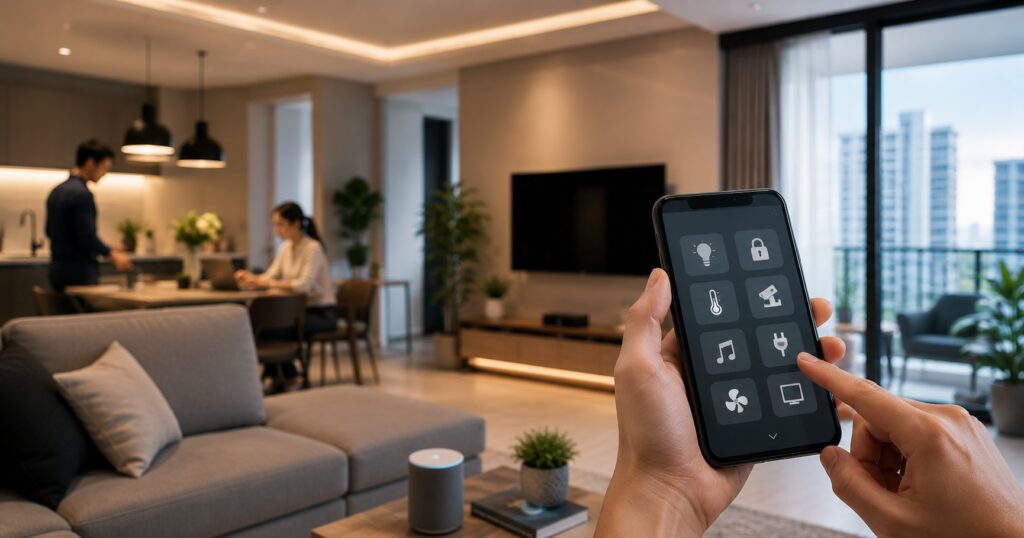
A decade ago most people associated smart home technology with luxury penthouses or expensive overseas apartments. Motion sensors voice assistants automated curtains plus app controlled lighting were seen as novelty features designed more for marketing than practical daily use. Today the conversation has shifted completely. Smart living technology is increasingly tied to energy savings security remote work plus even mental wellbeing.
Many residents now expect digital features to function quietly in the background without demanding constant attention. Homeowners want systems that improve daily routines rather than gadgets that feel complicated or intrusive. Property developers have also started recognising that buyers are becoming more selective about how technology fits into actual living habits.
Newer integrated developments are increasingly using digital systems to support modern commuting patterns as well as connected lifestyles. Features such as smart access management, app based visitor registration and parcel collection systems are becoming more common across urban residential projects. Developments such as Hudson Place Residences (Singapore) within the One North district reflect this broader direction through the integration of smart home functions, digital access systems as well as technology driven conveniences designed to support daily living more seamlessly. Located near major innovation clusters including Mediapolis, Fusionopolis as well as Biopolis, the development reflects how residential environments are evolving alongside districts shaped by technology, remote work as well as highly connected professional lifestyles.
This reflects a wider shift in how technology influences housing expectations. Buyers are no longer impressed purely by flashy features or futuristic marketing language. Instead they are evaluating whether digital systems genuinely improve daily life especially in cities where long work hours crowded transport plus constant connectivity shape everyday routines.
Remote work changed what people expect from homes
The rise of remote work reshaped residential expectations faster than many developers anticipated. Before flexible work arrangements became common most buyers focused heavily on location school access or investment potential. Interior design was important though technology infrastructure rarely became a deciding factor during property viewings.
That has changed significantly. Many professionals now spend large portions of their week attending video meetings managing cloud based systems or handling digital collaboration from home. Internet stability workspace design plus acoustic privacy have become serious concerns rather than secondary preferences.
Several interior designers have observed rising demand for layouts that support multitasking without making homes feel like corporate offices. Residents increasingly request built in charging stations concealed networking equipment plus lighting systems that can transition smoothly between work mode plus evening relaxation.
A software engineer working in cybersecurity recently described how his priorities changed after shifting into hybrid work. Instead of focusing purely on apartment size he became more concerned about signal reliability ventilation plus noise control during conference calls. He explained that unreliable internet infrastructure quickly turns small inconveniences into daily stress especially during client presentations or technical troubleshooting sessions.
Technology companies have also recognised this trend. Manufacturers are introducing products designed specifically for compact urban homes where residents balance professional responsibilities with limited space. Smart speakers now include work scheduling functions while lighting systems can automatically adjust brightness based on meeting hours or time of day.
Interestingly many residents still prefer subtle technology integration rather than homes that resemble futuristic showrooms. Hidden functionality often feels more desirable than visible complexity. People want convenience without feeling constantly monitored by machines.
Smart security systems are quietly reshaping neighbourhood life
Security technology has become one of the fastest growing segments within residential property development. Video doorbells facial recognition systems plus app controlled access features are now appearing across a wide range of housing projects rather than only premium developments.
For many residents the appeal goes beyond preventing crime. Smart security systems provide reassurance during travel long work hours or family emergencies. Parents can monitor when children return home while elderly residents may feel safer using digital emergency features connected directly to caregivers.
Property managers have also started relying more heavily on digital monitoring systems to improve operational efficiency. Automated visitor registration plus delivery management platforms reduce staffing pressure while creating smoother experiences for residents. In dense urban environments where parcel deliveries occur constantly this has become increasingly important.
However not everyone feels comfortable with growing surveillance inside residential spaces. Privacy concerns continue appearing during discussions about facial recognition plus behavioural tracking systems. Some residents worry that convenience may eventually come at the expense of personal freedom or data protection.
Cybersecurity specialists have repeatedly warned that poorly configured home devices can create vulnerabilities if residents ignore software updates or use weak passwords. Cases involving hacked cameras or compromised smart devices have reinforced concerns about balancing innovation with safety.
Despite these debates adoption continues expanding because many residents view the benefits as practical rather than experimental. The average homeowner may not describe themselves as highly interested in technology though they still appreciate systems that simplify everyday responsibilities.
Younger buyers view digital infrastructure differently
Younger property buyers often approach technology from a completely different perspective compared to previous generations. For many of them digital infrastructure feels as essential as plumbing electricity or transport access.
Property agents have noticed that younger buyers frequently ask about mobile connectivity charging layouts smart appliance compatibility plus digital management systems during viewings. Questions that once seemed niche now appear regularly across mainstream residential discussions.
Social behaviour also influences these preferences. Younger residents tend to spend more time interacting through digital platforms even while at home. Streaming gaming content creation plus remote collaboration all depend heavily on stable technological infrastructure. Poor connectivity can affect not only entertainment but also career opportunities.
Some developers are responding by designing communal areas with integrated work lounges podcast recording rooms plus high speed shared networks. These spaces reflect changing assumptions about how residential environments should function.
A real estate analyst recently observed that technology expectations are no longer confined to luxury market segments. Mid range buyers increasingly compare developments based on practical digital features rather than purely decorative amenities. Fast lift systems smart parcel lockers plus energy efficient climate controls now influence perceived value more strongly than some traditional facilities.
At the same time there remains visible skepticism toward excessive automation. Several younger homeowners have admitted frustration with overly complicated systems requiring multiple applications subscriptions or constant maintenance. Simplicity remains important even among digitally fluent buyers.
Technology inside homes will continue evolving quietly
The future of residential technology probably will not resemble science fiction films filled with robotic assistants plus fully automated lifestyles. Instead most changes are likely to appear gradually through small improvements embedded into ordinary routines.
Residents may notice smoother visitor access quieter appliances faster connectivity plus more efficient energy usage long before they think consciously about artificial intelligence or digital infrastructure. Successful technology often becomes invisible once it integrates naturally into daily habits.
Property developers face growing pressure to balance innovation practicality plus long term reliability. Buyers have become more informed about which features genuinely improve quality of life versus those included mainly for promotional purposes.
Experts within architecture design plus urban planning increasingly agree that technology should support human behaviour rather than dominate it. Homes still need warmth comfort privacy plus emotional connection regardless of how advanced their systems become.
The modern city continues evolving around digital lifestyles shaped by flexible work online services plus mobile communication. Residential spaces are adapting alongside those changes sometimes slowly sometimes surprisingly quickly. What remains clear however is that technology is no longer treated as an optional extra within housing discussions. It has become part of how many people evaluate comfort convenience security plus personal wellbeing in everyday urban life.